
Ready to act? Get ACB Breakout Arrows Indicator Now
Price Action Breakout Strategy for Consistent Trading Success

Everyone has heard of price action breakout trading; it’s all over the place and is mentioned in every playbook and guide, and that is for a good reason. In this post, we’ll look at the price action breakout strategy and walk through a clear plan you can start using right away.
When executed the right way, it can be a great addition to your trading strategy. But there is a catch: Price action breakout trading offers the potential for significant gains; it can be highly confusing and risky, specifically in markets notorious for fakeouts and false breakouts that trap unsuspecting traders.
Let’s be real for a second, how many times have you nailed what looked like a perfect breakout only to watch it slam back against your entry like the market knew exactly where you placed your stop? If you're nodding your head, you're not alone.
That feeling of neglect? Yes we know it.
In this guide we’re breaking down the breakout strategy that real traders use to win, even in messy, unpredictable markets. You’ll learn how to catch moves that actually matter, filter out the noise and dodge the traps.
What is a Breakout?
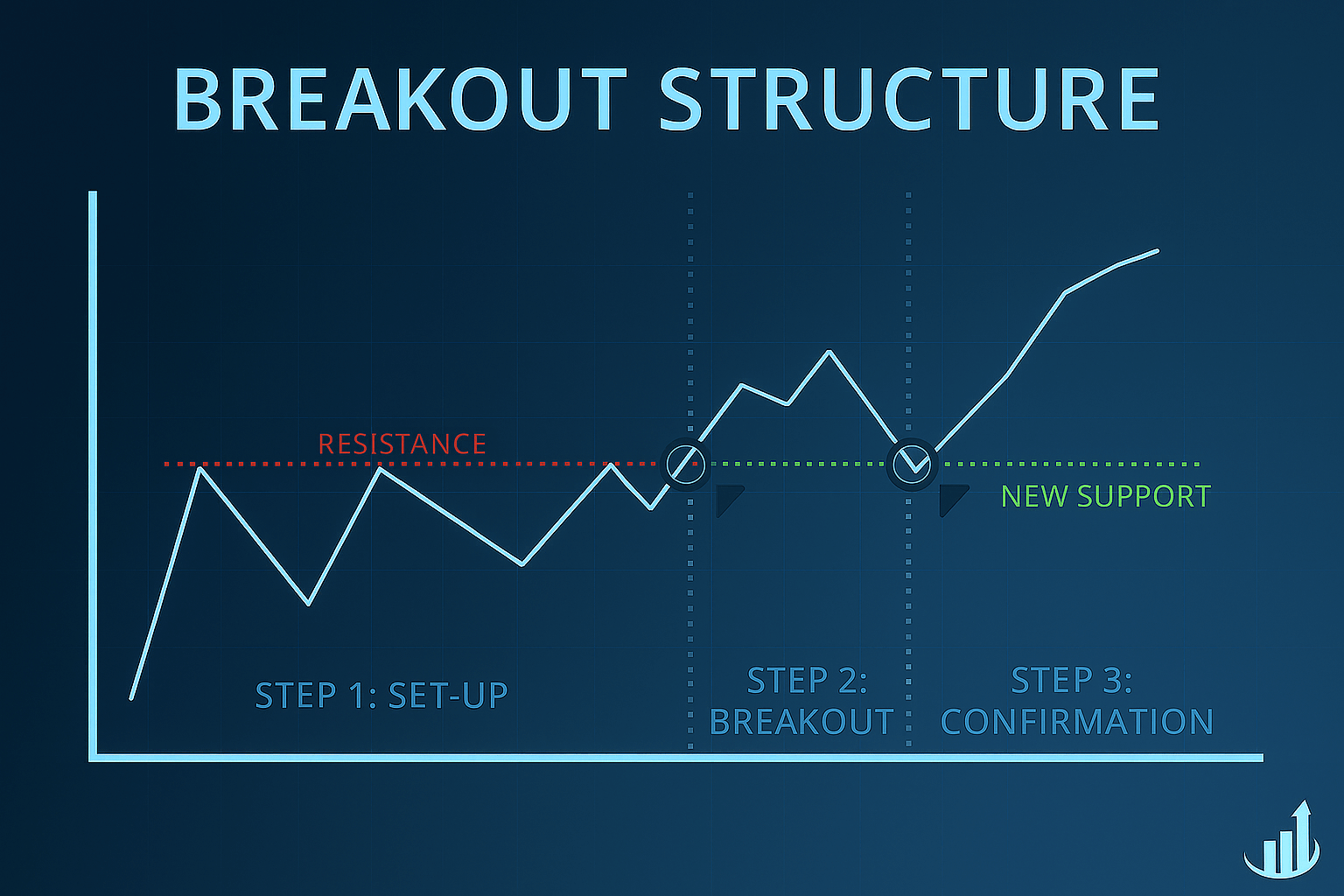
To put it in simple terms, A breakout is when the price moves outside a defined support or resistance level with the right volume and momentum. The breakout can occur vertically or horizontally; it’s more like watching the birth of a new trend created by a healthy volume.
Here’s what most traders miss: breakouts don’t just happen out of nowhere they actually build up. Imagine price action consolidation like a pressure cooker. Support and resistance levels trap price inside a range while bulls and bears battle for control. And when that pressure reaches its tipping point, the market snaps.
One side wins, and Price bursts out of its cage hard and with purpose.
A great opportunity lies within. But not every breakout is worth trading. Fakeouts are everywhere so you have to know how to separate noise from a real signal.
Quick characteristics of a valid breakout before we actually start:
- A surge in trading volume at the breakout point.
- Momentum is strong enough to push through barriers.
- Candles that close decisively beyond support or resistance.
- Continued movement that confirms the breakout isn’t a trap.
Understanding these fundamentals forms the base foundation for developing a successful price action breakout strategy.
The Sentiment Behind Successful Breakouts

Forget technicals for a moment. Breakout trading is deeply psychological/sentimental, when price creeps toward a critical level, emotions start to take over fear, greed, and doubt flood the market.
Traders on the wrong side feel a squeeze which triggers stop-losses and creates a chain reaction. Onlookers feel the itch and FOMO kicks in so they jump in late.
Meanwhile, institutional algorithms detect the shift and pile in, amplifying the move.
Add in retail breakout traders who’ve been stalking the setup, and suddenly the breakout has momentum.
While you watch a big candle break a support or resistance level, on a deeper level, it’s a storm of emotion and automation.
Understand this pattern, and you’ll know when to step in with conviction or when to stand back and avoid the trap.
This psychological cascade effect is what creates the momentum necessary for sustained price moves following legitimate breakouts.
The most common breakout trading setups
The line between a clean breakout and a brutal fakeout almost always comes down to setup quality; it's a thin line. And more often than not, the best setups come from the most recognized patterns, the ones traders across the globe are watching.
These patterns build tension, trap indecision, and signal when the price is ready to break.
Most Common Consolidation Patterns That Signal Breakouts:
- Symmetrical triangles and ascending/descending triangles.
- Rectangles and classic channel ranges.
- Flags and pennants that follow strong moves.
- Wedge formations that tighten price action before release.
Reliable Support and Resistance Zones Often Include:
- Previous swing highs and lows.
- Key moving averages and the VWAP.
- Fibonacci retracement zones are watched by many traders.
To separate strong breakouts from noise, watch for price action signals like pin bars, inside bars, or engulfing candles forming near these zones.
The more times price knocks on a level without breaking it, the bigger the move tends to be once it finally breaks.
The Complete Breakout Trading Strategy Framework
Phase 1: Recognize the pattern and identify the setup
The first step in executing a successful breakout trading strategy is to identify consolidation patterns on your favorite pair charts. Look for areas where price has been contained within defined boundaries for an extended period.
Optimal timeframes for breakout analysis:
- Daily charts for swing trading setups.
- 4-hour charts for intermediate-term trades.
- 1-hour and 15-minute charts for scalping setups.
The longer the consolidation period, the more significant the eventual breakout typically becomes. It’s a logical relationship between time and volatility to ensure a breakout success
Phase 2: Volume Analysis and Confirmation
Volume is a core actor in breakout trading. It’s the key confirmation tool that helps you separate real moves from fakeouts. When a breakout is legit, the market doesn’t whisper it roars.
Here’s what to look for in a valid breakout:
- A volume increase of 150% or to be more precise, more above the average.
- Healthy volume as price follows through.
- Volume peaks on pullbacks, confirming that buyers (or sellers) are defending the breakout zone.
Sure, traditional volume indicators can help, but if you’re serious about catching high-probability breakouts, you’ll want to leverage modern and more technical tools.
You should never forget that banks, hedge funds, quant firms, and other high-capital financial institutions use automated, algorithmic, and high-frequency indicators. So keeping up with technological advancements is a must.
Phase 3: Entry Strategy and Timing
There’s more than one way to enter a breakout, but timing is everything. Your approach should align with your personality, a.k.a (trading style, risk appetite) and the nature of the breakout itself.
1. Immediate Entry
- Enter as the price closes beyond the breakout level.
- Perfect for aggressive traders looking to ride the full momentum wave and capture max pips.
- Higher reward potential, but also more exposure to fakeouts.
2. Retest Entry
- Wait for the price to pull back to the breakout zone.
- Enter when that level holds firm as new support or resistance.
- Offers a cleaner setup with better risk-to-reward ratios.
3. Momentum Confirmation
- Let the breakout play out, then enter on a follow-through signal.
- Look for flag patterns, small consolidations, or volume bursts confirming direction.
- Most cautious method: lower risk, fewer entries, and less pips.
There’s no “best” method, only the one that fits your trading plan. The key is being decisive and disciplined, no matter which path you choose.
Phase 4: Risk Management and Position Sizing
This is where most traders mess up. Even the sharpest breakout trading strategy will crumble without rock-solid risk management. Protecting your capital is the whole concept in this situation.
Stop-Loss Placement
- For bullish breakouts, place stops below the consolidation pattern.
- For bearish breakouts, stops go above the structure.
- Use the highest high or lowest low inside the pattern as your buffer.
- Give the trade breathing room but not a second chance.
Position Sizing Rules
- Never risk more than 1–2% of your account on a single trade.
- Calculate your lot size based on stop distance, not gut feeling.
- Adjust your size depending on setup quality and market volatility.
Take-Profit Strategies
- First targets? Previous swing highs/lows (Depends on your R:R).
- Use measured move projections (pattern height) for extended targets.
- Trail your stop to lock in profits if the move extends.
- Take partial profits at logical resistance or psychological zones.
Dial in these mechanics, and you’ll transform your breakout strategy from hopeful to professional where risk is controlled, entries are clean, and profits are intentional.
Advanced Breakout Trading Techniques
Multi-Timeframe Analysis
Experienced traders utilize several timeframes to enhance their breakout trading strategy.
Time Frame Alignment Strategy:
- Use the daily chart to lock in your directional bias.
- Drop to the 4-hour to find breakout structures forming.
- Zoom into the 1-hour for trigger signals.
- Fine-tune with the 15-minute time to your entry to the candle.
When all these timeframes align like gears in a machine, you’ve got what’s called a high-probability trading setup.
Technology-Enhanced Breakout Trading

Modern trading technology has revolutionized how traders identify and execute breakout strategies. Advanced indicators can scan hundreds of currency pairs and timeframes simultaneously, alerting traders to optimal breakout conditions as they develop.
Some traders utilize sophisticated tools that combine price action analysis with volume confirmation, providing arrows or signals when all conditions align for high-probability breakouts.
These technological aids don't replace fundamental understanding but can significantly enhance a trader's ability to spot opportunities across multiple markets.
Benefits of technology-enhanced breakout trading:
- Simultaneous monitoring of multiple markets.
- Real-time alerts when optimal conditions develop.
- Automated risk management features.
- Performance tracking and analysis capabilities.
- Reduced emotional decision-making.
Sector and Market Correlation Analysis
Understanding how different markets and sectors correlate can provide an additional edge in breakout trading. For example:
- Forex market correlations between currency pairs.
- Commodity correlations with related currency pairs.
- Stock sector breakouts often move in waves.
- Bond market breakouts affecting currency markets.
Managing False Breakouts and Market Traps
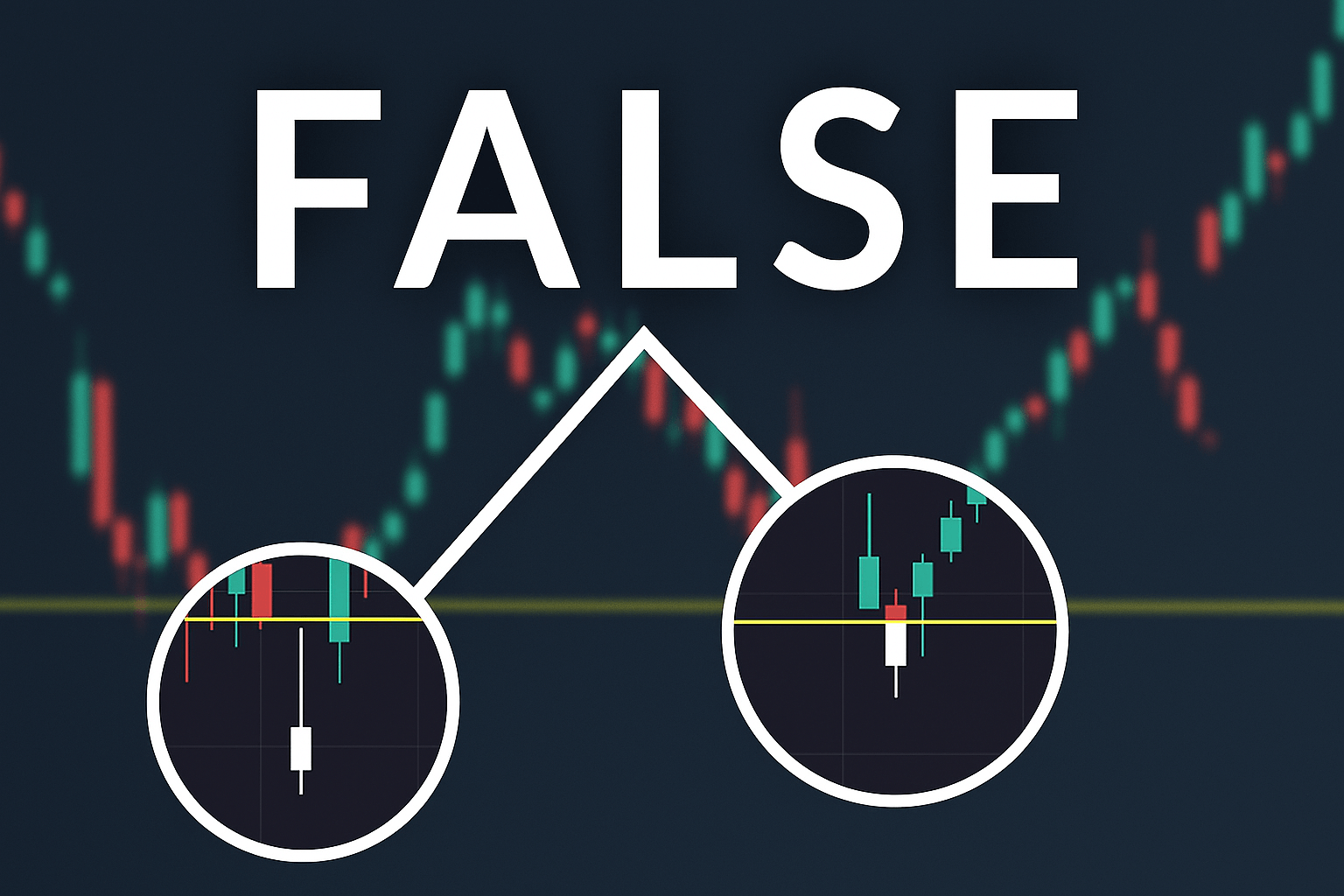
False breakouts represent one of the biggest challenges in breakout trading. These occur when price briefly breaks through support or resistance before reversing back into the previous range. Learning to identify and avoid these traps is crucial for long-term success.
Characteristics of False Breakouts
Common warning signs include:
- Low volume during the breakout move.
- Weak or indecisive candle patterns.
- Breakouts occurring during low-liquidity periods.
- Lack of follow-through after the initial break.
Strategies to Minimize False Breakout Impact
Patience and Confirmation: Rather than rushing into every apparent breakout, wait for additional confirmation. This might include:
- Volume surge accompanying the breakout.
- Strong momentum candles showing conviction.
- Successful retest of the broken level.
- Multiple timeframe confirmation.
Risk Management Discipline: Even with the best analysis, some false breakouts are inevitable. Protecting against them requires:
- Tight stop-losses positioned logically.
- Position sizing that limits damage from failed trades.
- Acceptance that not every breakout will succeed.
- Focus on overall profitability rather than individual trade outcomes.
Building Mental Resilience for Breakout Trading
Emotional Control and Resilience
Breakout trading can be emotionally challenging due to the high-energy nature of these moves. Developing emotional resilience involves:
- Accepting that losses are part of the process.
- Maintaining discipline during winning streaks.
- Avoiding revenge trading after false breakouts.
- Staying patient during slow periods.
Trading Psychology and Discipline
The psychological aspect of breakout trading cannot be understated. Success requires:
- Disciplined approach to trade selection.
- Consistent application of risk management rules.
- Ability to remain objective during volatile periods.
- Confidence in your strategy during drawdown periods.
Technology and Tool Integration
Today, breakout trading goes far beyond simple lines or volume bars. To be successful you have to utilize the latest technology to filter out all of the market's noise and concentrate on actual opportunities.
Smart indicators now scan multiple charts, timeframes, and price structures simultaneously (and in real time) to determine the most optimal moments price is set to breakout.
The best of these tools combine price action logic, volume confirmation, and momentum analysis, oftenpresenting it visually think arrows, break zones, and signal confirmations all in real time.
One standout example? The ACB Breakout Arrows indicator for Metatrader.
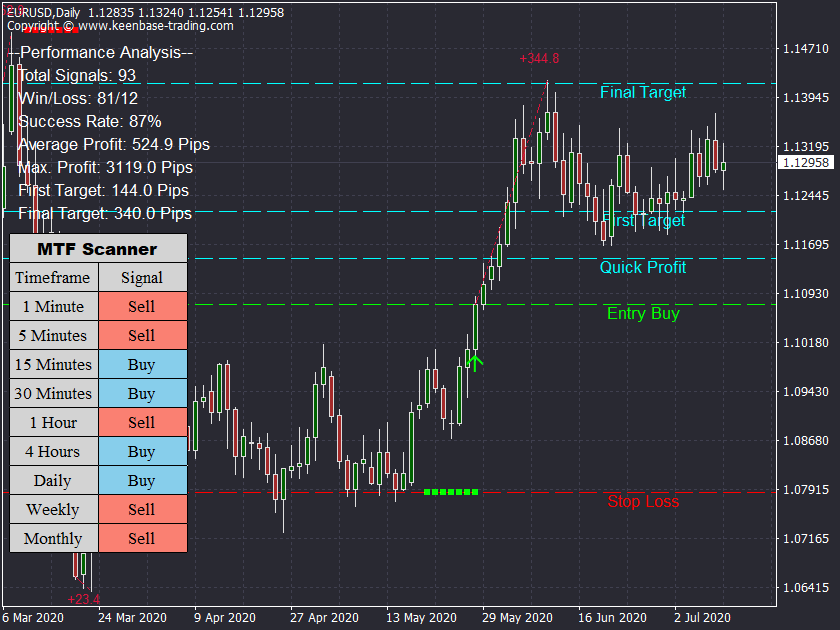
It does the heavy lifting by detecting precise breakout patterns, monitoring directional momentum, and triggering entry signals just before the move takes off. You get built-in stop-loss and take-profit guidance, a Quick Profit Line for scalpers, and it never repaints making it a trusted companion for breakout-focused traders.
This type of tech amplifies your strategy, helping you stay focused, manage risk, and respond to dynamic market setups as they unfold.
Why Technology Helps:
- Scan multiple markets at once never miss a setup.
- Get triggered alerts for when breakout conditions align. They literally ‘breakout’.
- Risk and trade management automation.
- Amass actionable performance data and refine your edge.
- Refine your decision making, eliminate the second guessing, and act decisively.
Conclusion: Mastering the Art of Breakout Trading
Breakout trading is one of the most used strategies for capturing momentum and generating consistent profits if executed with precision. To succeed, you need more than just chart patterns. You need a solid grasp of price action, disciplined risk management, and the mental toughness to stick to your plan.
Here’s the foundation:
- Recognize high-probability patterns before they break.
- Confirm breakouts with volume and momentum.
- Protect capital with smart position sizing and stop-losses.
- Stay emotionally disciplined, even when the market fakes you out.
- Adapt and refine your strategy as markets evolve.
The most successful traders combine classic price action techniques with modern breakout tools and filter techniques to stay ahead of the market. Tools like the ACB Breakout Arrows Indicator streamline the process helping you act fast, reduce emotional errors, and improve your edge.
Ultimately, breakout trading rewards those who are prepared, focused, and willing to learn. Stick with it and the edge will become yours.
Take Your Trading to Next Level
Get Access to all our Products

Take Your Trading to Next Level
You Might Also Like: